Chest injuries
The chest is the engine room of the body, with the chest wall guarding essential vital organs.
Rib fracture
The most common chest injury and is usually caused by direct force.
| Recognition |
Localised pain or tenderness. Bruising and/or swelling. Shallow breathing, with pain on deep breathing or coughing. Favouring injured side and little movement of associated arm.
| Management |
Sit upright with arm supported by an elevation sling. Go to hospital. Walk out with help.
Flail chest
Occurs when there are two or more fractures in two or more adjacent ribs, so that a portion of the chest wall is unstable. Leads to paradoxical movement of the chest wall causing life threatening breathing difficulties.
| Recognition |
Distressed, painful breathing. Central cyanosis. Can see and/or feel the flail segment.
| Management |
Maintain clear airway. Cervical spine immobilisation. Stabilise the flail segment using firm manual pressure or star tape a bulky dressing over the segment in the ‘in’ position.
Pneumothorax
This is the presence of air in the pleural cavity, air entering form either the outside through a chest wound or from the lungs inside. The air bubble compresses the lung, preventing adequate ventilation.
| Recognition |
Breathing difficulties with chest pain. Possible cyanosis. Fast pulse. Perhaps tracheal deviation toward un-injured side.
| Management |
Maintain a clear airway with C-spine stabilisation. Seal open chest wound, (with correct chest seal) Keep warm, monitor and reassure. Conscious casualty should be sitting.
Haemothorax
Considerable blood loss into the pleural space can occur leading to all the problems of the pneumothorax and perhaps leading to profound hypovolemic shock.
Pneumothorax
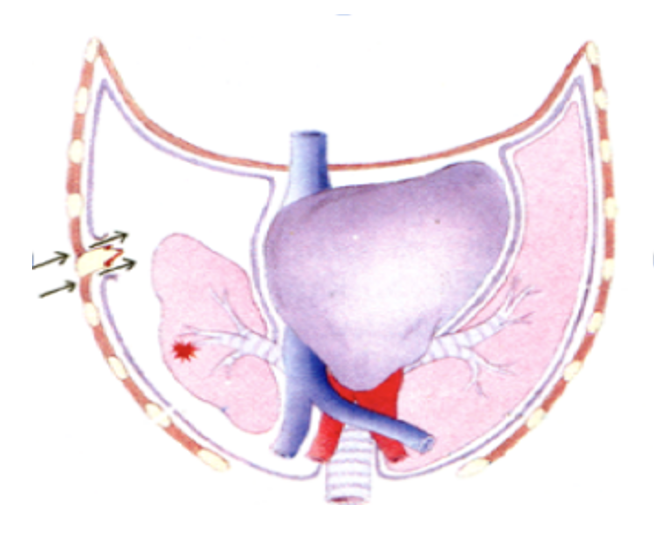
Haemothorax
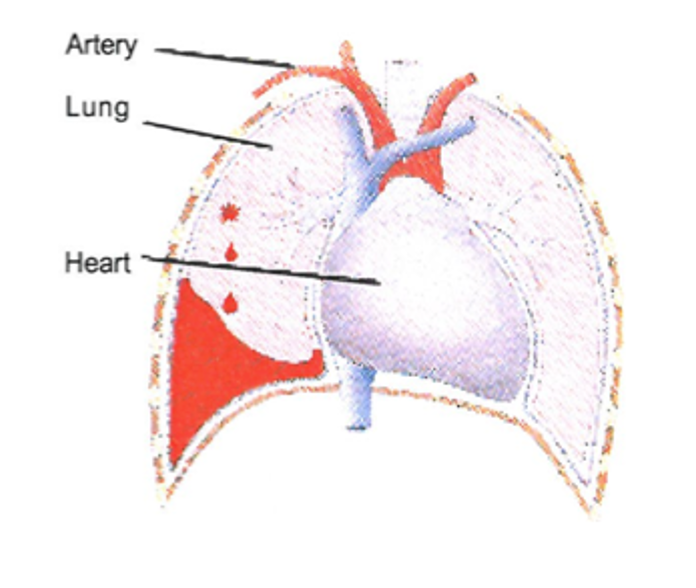
Tension pneumothorax
When air enters the pleural cavity through a hole, which acts as a one-way valve. Air enters during inhalation but cannot escape during exhalation, thus increasing pressure within the space. Increasing thoracic pressure leads to poor ventilation, poor heart function and poor circulation within the main blood vessels in the chest.
| Recognition |
Shallow, rapid, difficult breathing. Every breath becomes more difficult. Cyanosis. Signs of shock. Rapid onset. Thoracic pressure causes, distended neck veins, bloated face, tracheal deviation away from injured side.
| Management |
Immediate medical help, monitor vital signs, prepare to resuscitate.